
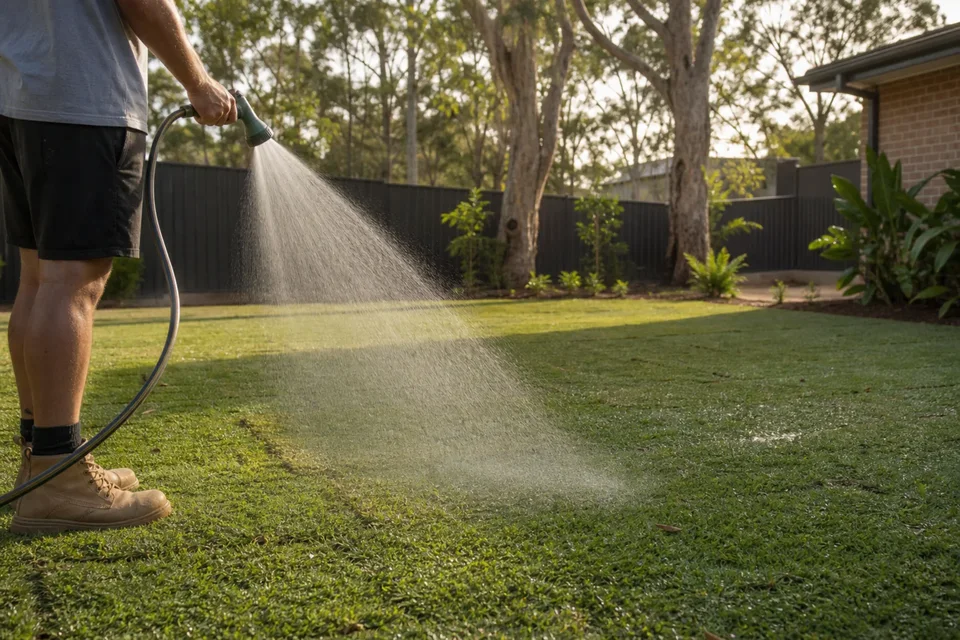
Some lawns are there to be admired. Others have children running across them, a dog following the same route to the gate and a mower working overtime through summer.
Kikuyu is made for the second kind of yard. Give it strong sun, suitable soil and consistent care, and its vigorous warm-season growth can build a dense lawn and repair everyday wear quickly.
It is not the quiet option. Kikuyu grows with purpose. The same runners that help it recover also need mowing and edging. For the right household, that is a fair trade for a lawn ready to be used.
Is Kikuyu right for your yard?
Kikuyu deserves to be first on the list when most of these statements are true:
- The lawn receives strong direct sun.
- Children, dogs, entertaining or backyard games will create regular wear.
- Fast repair during warm active growth matters.
- The area is open rather than heavily shaded by buildings or trees.
- You accept frequent mowing and firm edging while growth is strong.
- You want a practical lawn rather than a grass that must remain untouched.
Think twice if the yard receives limited winter light, if you dislike runners reaching garden beds, or if mowing is something you postpone for weeks. Kikuyu can be forgiving of use; it is less forgiving of neglect.
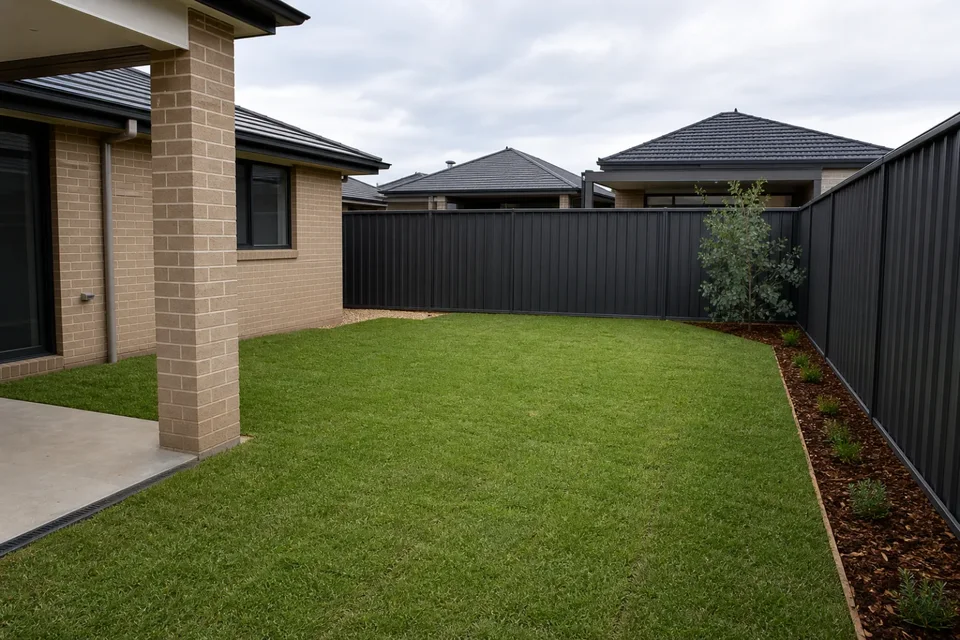
Why homeowners choose Kikuyu
It gets back to work
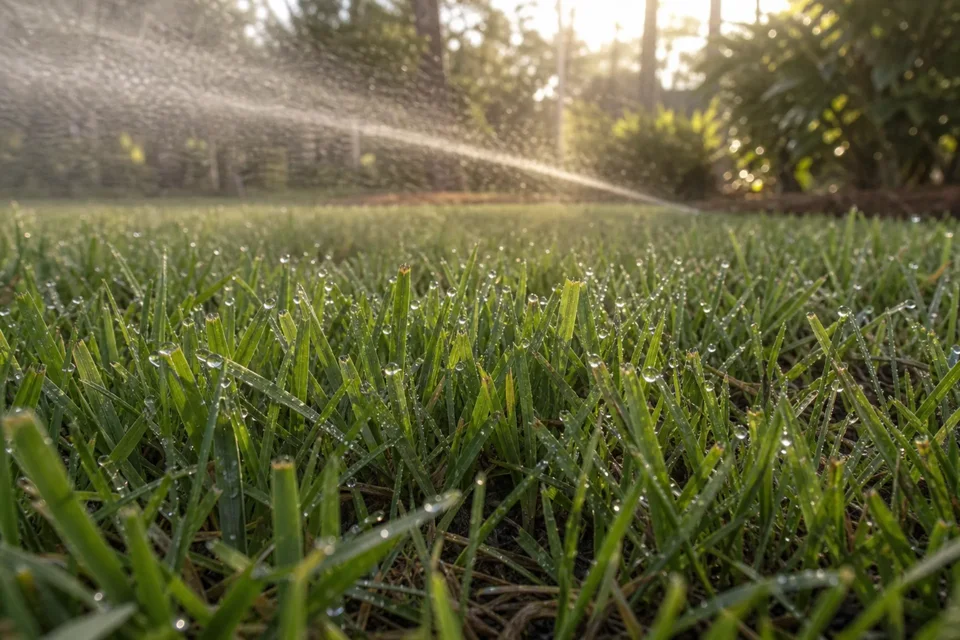
Feet, paws and play can thin any lawn. Kikuyu’s vigorous growth gives it a strong ability to close small worn areas during its active season, provided it has enough sun, moisture, nutrition and healthy soil.
That makes a practical difference in a family yard. The lawn does not have to be treated like carpet in a formal room. It can be part of everyday life.
It suits bright, open spaces
Kikuyu performs best where there is plenty of useful light. Sunny backyards, open front lawns and larger properties are natural fits. In a yard with a bright centre and deeply shaded boundaries, the centre may thrive while the edges struggle. Choose for the whole site, not its sunniest square metre.
It can cover active areas densely
Healthy, well-managed Kikuyu can form a dense surface. That density is useful under general family traffic, but no living lawn is indestructible. A goalmouth, dog-door route or narrow side gate may still need a path or a change in layout.
It is an honest, practical choice
Kikuyu is not sold here as a luxury label. Its appeal is straightforward: vigorous cover for sunny lawns that get used. If that matches your home, it can be exactly the right grass.
The trade-off: growth needs managing
The best reason to choose Kikuyu is also the reason to pause before ordering it.
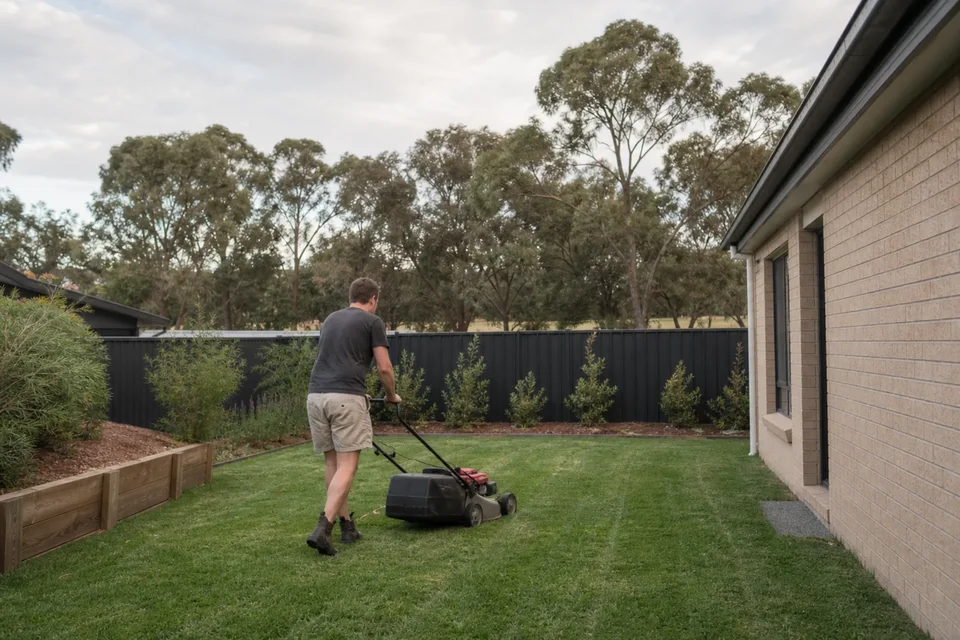
Kikuyu spreads through surface runners and underground stems. This helps it repair, but it also helps it cross weak edges and move into garden beds. Regular mowing keeps the leaf at a useful height; regular edging keeps the lawn in the area you intended.
In warm, wet growing weather, mowing may be needed more often. Leaving the grass long and then cutting it hard can expose pale stems and create a scalped appearance. A consistent routine is easier on the lawn and easier on you.
Choose Kikuyu with clear eyes: it is a willing worker, not a low-input ornament.
Practical care proof
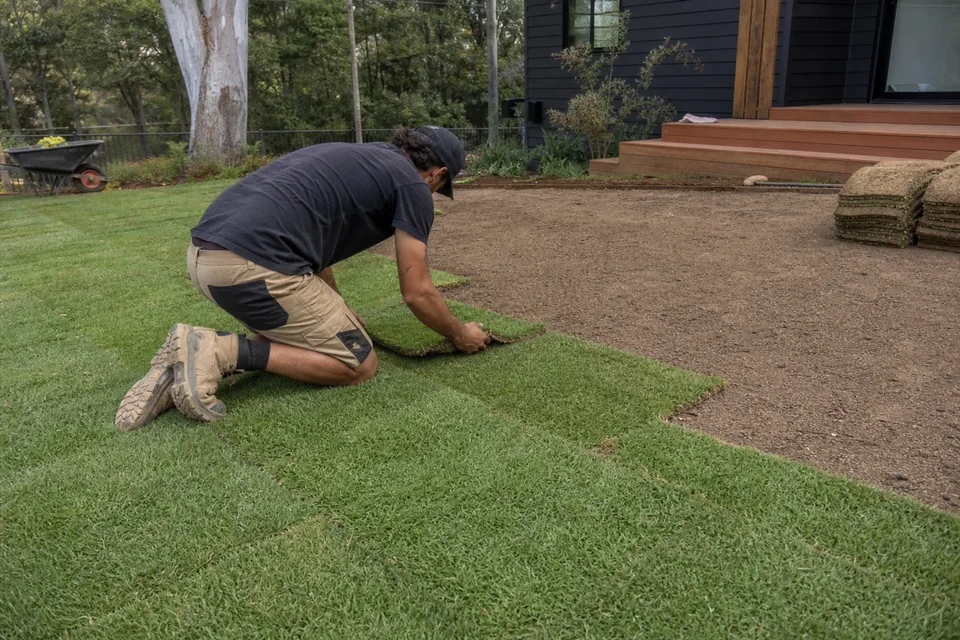
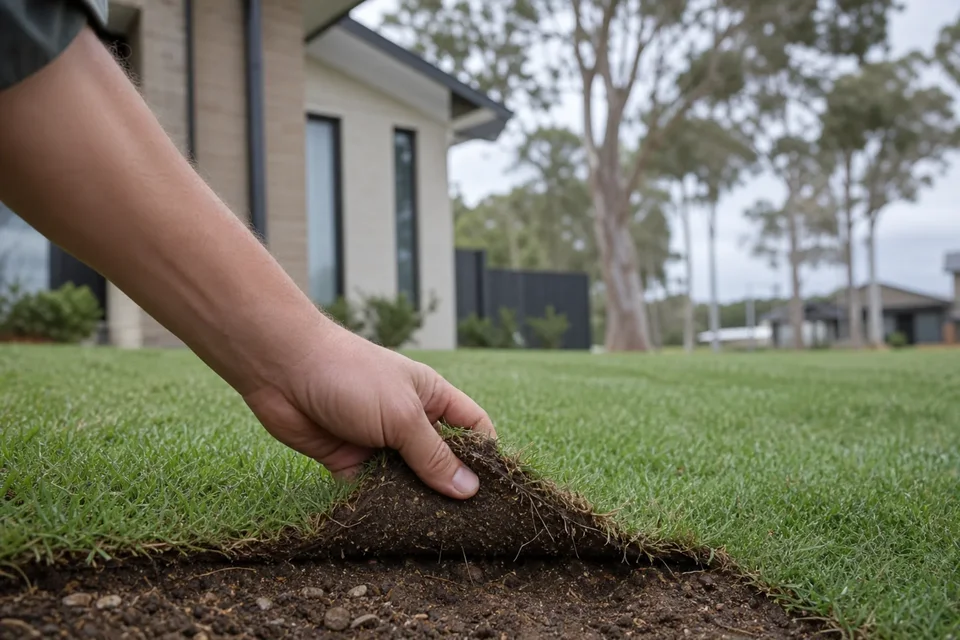
Good Kikuyu is not just a variety choice. It is healthy turf, prepared ground, watering, mowing and checking that roots are taking properly.
Kikuyu for dogs, children and backyard sport
For a sunny yard with active use, Kikuyu is often the stronger of Demarco Sydney Turf’s two options. Its advantage is not that paws and boots cannot damage it. Its advantage is its capacity to grow back when conditions support active growth.
Spread the wear where you can. Move goals and play equipment. Give wet ground a rest. Create a hard-surface step outside the dog door if every trip crosses one small patch. Good lawn design can prevent a predictable traffic line from becoming a permanent bare strip.
During cooler weather, growth and repair slow. A lawn that recovers quickly in January may not close damage at the same rate in July, particularly in colder western and southwest Sydney pockets.
Sun, shade and the honest limit
Kikuyu wants strong light. It is not the first choice for a yard dominated by building shade or dense tree canopy.
Before ordering, observe the lawn area in the morning, at midday and in the afternoon. Think about winter, when shadows stretch farther. A new-estate backyard can look bright above the fence in summer yet lose useful sun beside the house in winter.
If the yard has substantial moving shade, compare Sir Walter Buffalo. If it has deep, persistent shade, neither product may be the right surface for that section.
What happens in winter?
Kikuyu is a warm-season grass. As temperatures fall, its growth slows. Colour and recovery can reduce, and frost can make the seasonal change more noticeable.
That does not make it a poor Sydney lawn. It means the lawn has a yearly rhythm. Avoid promising identical colour or repair in every month. Reduce wear where practical when growth is slow and follow approved seasonal care rather than trying to force summer behaviour in winter.
Give Kikuyu the ground it needs
Fresh turf can look good for a short time even over a poor base. The real test begins when roots need to move into the soil below.
Before laying:
- Remove building waste, weeds and unsuitable fill.
- Correct drainage and finished levels.
- Relieve compaction where appropriate.
- Prepare a suitable, even turf underlay.
- Make sure the surface is firm, not hard and sealed.
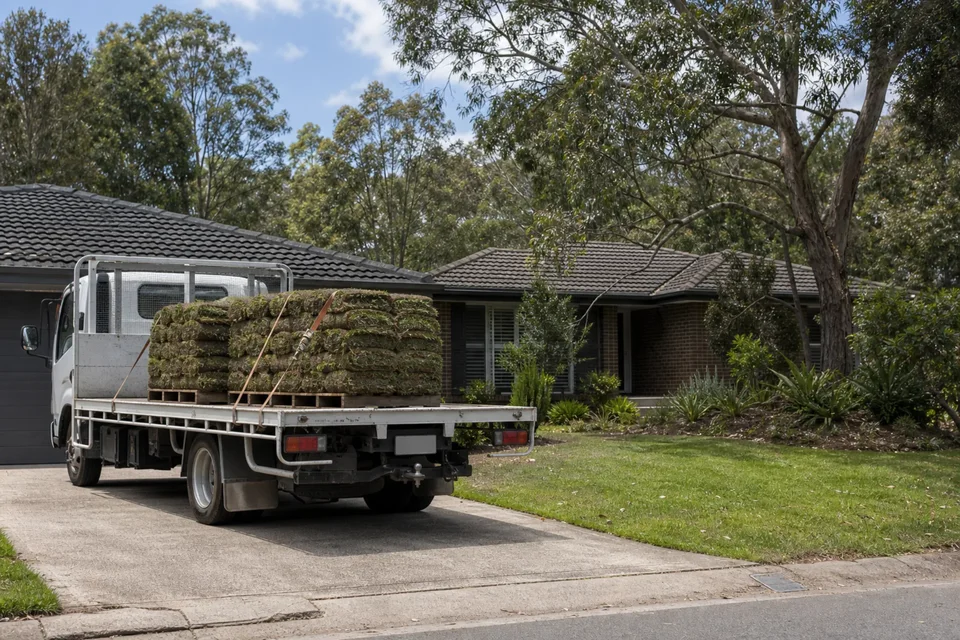
- Have the site and watering ready before delivery.
Kikuyu’s vigour cannot fix waterlogging, severe compaction or bad levels. Better preparation gives its roots somewhere useful to go.
Grown for the lawn beyond the farm gate
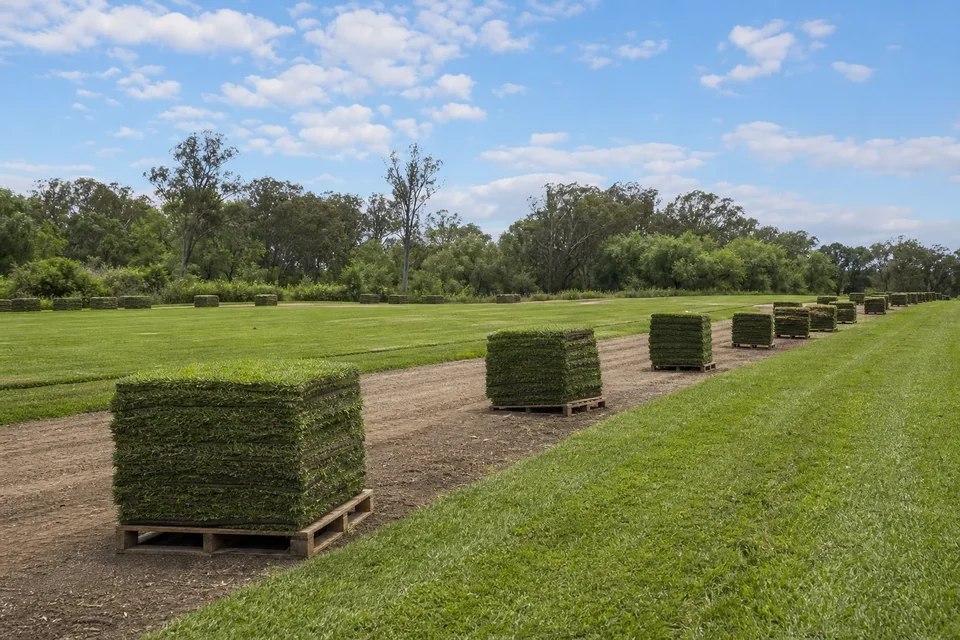
Better farming makes better lawns. Demarco grows turf as a living crop, with attention to the condition of the growing ground and the turf that leaves it.
For a homeowner, the point is simple: the lawn’s life did not begin on delivery day. We grow better turf so you can grow a better lawn—then help you match the variety to the place it has to live.
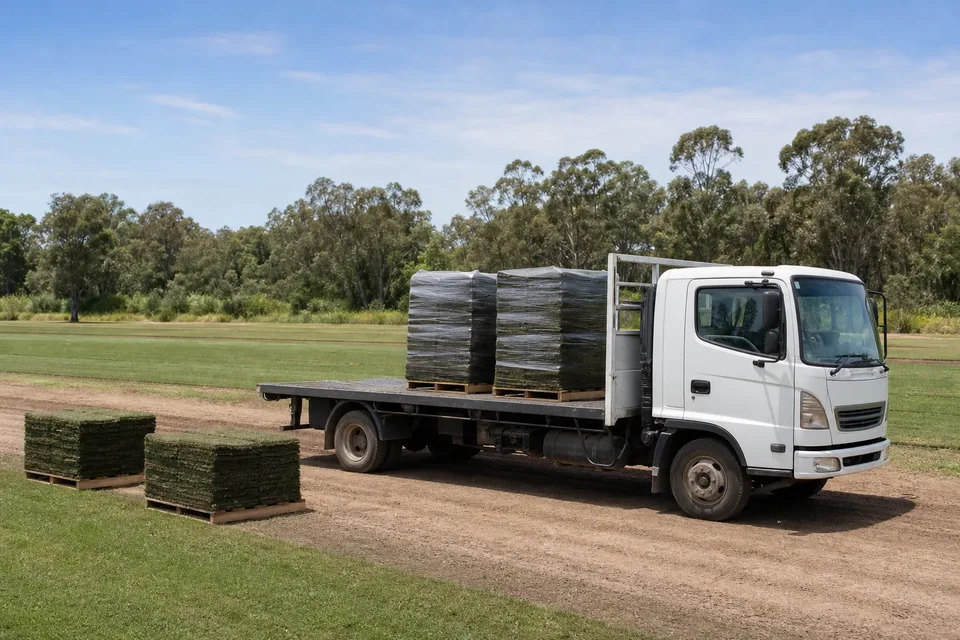
Kikuyu or Sir Walter?
Choose Kikuyu when the lawn is bright, busy and needs fast warm-season repair. Choose Sir Walter when the light is mixed and you prefer a broad leaf with less aggressive containment.
If the yard has strong sun in one half and deep shade in the other, the answer may include a smaller lawn, a path or a garden area—not one turf forced into every corner.
Put Kikuyu to work in your yard
Send your postcode, measurements and photos. Tell us about sunlight, dogs, children, drainage and your mowing routine.
Kikuyu FAQs
Is Kikuyu good for Sydney backyards?
Yes, particularly sunny backyards that receive regular family, pet or play traffic. Its warm-season growth can repair wear quickly. It is less suited to heavily shaded areas and needs consistent mowing and edging.
Is Kikuyu good for dogs?
Kikuyu is often a strong choice for dogs when the yard gets plenty of sun and the wear is spread across the lawn. Concentrated traffic, digging, urine stress and winter slowdown can still cause damage. A path near the dog door may help more than turf alone.
Does Kikuyu grow in shade?
Kikuyu performs best in strong light. Some moving shade may be manageable, but a yard with substantial or persistent shade is usually a better reason to consider Sir Walter—or a non-lawn surface in the darkest area.
Is Kikuyu hard to maintain?
It is not complicated, but it is active. Expect regular mowing through strong growth and edging to control runners. If you want a slower, easier-to-contain lawn, compare Sir Walter.
Does Kikuyu stay green all winter?
Do not rely on guaranteed winter colour. Growth slows in cool weather, and colour can be affected by frost, light, soil, nutrition and local conditions.