
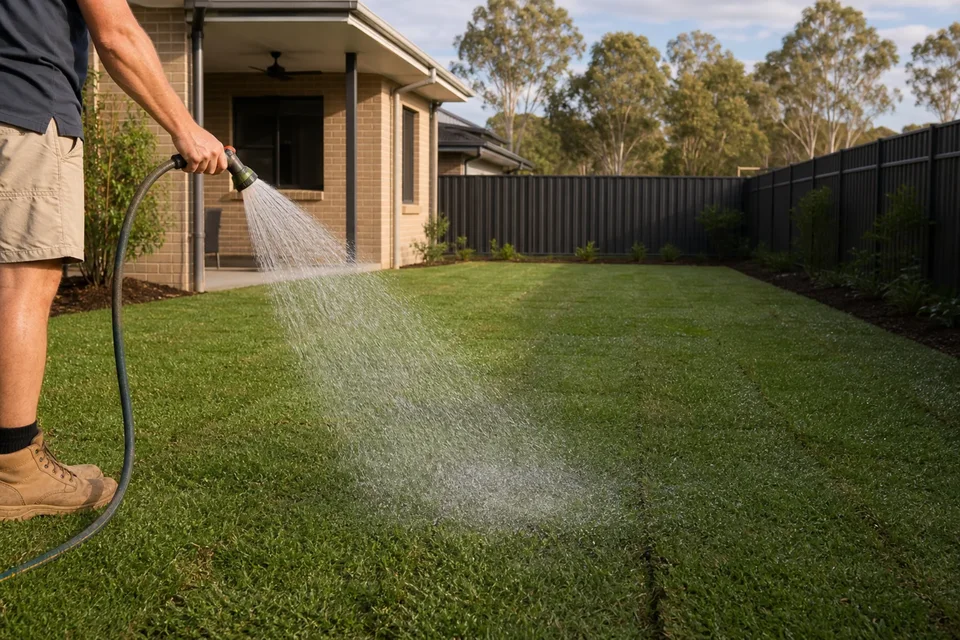
Water new turf within 30 minutes of laying. Keep the turf and soil beneath it moist while roots begin to attach, then water less often as the lawn holds. Do not follow one fixed number of minutes for six weeks. Sydney weather, wind, shade, soil and sprinkler output can make the same runtime too little in one yard and far too much in another.
Use a rain gauge to measure each application, then change the frequency as the weather and rooting change. A 3 mm application is a useful starting measure during establishment, subject to the final Demarco care instructions for the named turf.
Before the truck arrives
Watering problems often begin before the turf is laid. A sprinkler that misses one corner will not improve because the rolls are now on the ground.
Complete this check first:
- Turn on every sprinkler and watch the full pattern.
- Put several straight-sided containers or rain gauges across the area.
- Record how long it takes to collect the target depth in each zone.
- Fix blocked nozzles, weak pressure and overspray.
- Separate sunny and shaded zones where possible.
- Make sure a hose and trigger nozzle can reach exposed edges.
- Check the current Sydney Water rules.
Place a rain gauge between sprinklers or in the middle of the new lawn. Measuring depth is better than saying “water for ten minutes” because sprinklers deliver water at different rates.
A six-week watering framework
This table is a practical observation plan, not a replacement for supplier instructions.
| Stage | Main aim | What to check | How to respond |
|---|---|---|---|
| Laying day | Wet turf and the prepared soil below. | Lift corners and inspect the full depth. | Water within 30 minutes; cover every roll without runoff. |
| Days 1–3 | Stop rolls and edges drying. | Heat, wind, rain, seams and exposed edges. | Use measured applications as conditions require. |
| Until roots hold | Maintain moisture for new root growth. | Gentle pull test in several zones. | Continue regular checks; avoid saturation. |
| After turf resists lifting | Encourage roots to move into the soil. | Moisture deeper in the root zone. | Reduce frequency rather than keeping the surface constantly wet. |
| Weeks 3–4 | Build a more independent lawn. | Rooting, weather, colour and footprints. | Water according to need and named-variety guidance. |
| Weeks 5–6 | Move toward normal care. | Soil moisture before watering and recovery after it. | Water deeper and less often where conditions allow. |
Rain counts. A shower that wets only the leaf may not replace an irrigation event. A soaking fall may mean the next planned watering should be skipped.
Laying day: do not wait until the job is finished
Water new turf within 30 minutes of laying. On a large lawn, water completed sections while the remaining rolls are being installed.
The first watering should moisten the rolls and the soil directly below them. Lift a corner in several places. The leaf can look wet while the underlay remains dry.
Pay extra attention to:
- edges beside hot paving
- narrow offcuts
- high or windy spots
- corners missed by circular sprinklers
- rolls laid last
- slopes where water runs away.
Stop water running onto paths or into drains. Runoff wastes water and may move soil beneath the new turf.
Days one to three: protect the rolls
Freshly cut turf has limited access to water in the ground. Its new roots have not yet secured it. During the first days, inspect it more than once, especially in warm or windy weather.
A breezy coast can dry edges, while a hot Western Sydney day increases demand. Shaded clay may still remain wet. Adjust the schedule to what is happening in the yard.
Look beneath the turf. It should feel moist, not dusty and not like a swamp. If water squeezes out or the soil smells sour, check drainage and reduce unnecessary applications. If corners curl or the soil is dry below, act promptly.
Do not assume brown or dull colour always means “add more water”. Heat stress, poor soil contact, disease, cold and waterlogging can look similar from a distance.
Until roots hold: use the pull test
Gently try to lift a corner. If it comes up easily, roots have not secured it. If there is resistance, roots are entering the soil.
Test several parts of the lawn. A sunny centre, shaded side and windy boundary may progress at different speeds. Do not tug hard enough to break new roots.
While turf still lifts:
- keep traffic off it
- maintain even moisture below the rolls
- correct dry gaps in sprinkler coverage
- account for rain and cool days
- avoid flooding slow-draining sections.
Once the turf resists lifting, begin spreading watering farther apart. The change should be gradual and based on soil moisture. Keeping only the surface wet encourages a shallow watering habit and can leave the soil below dry.
Weeks three and four: change the pattern
By this stage, many lawns should be moving from roll protection toward root-zone watering. Winter-laid turf or shaded areas may be slower. A hot summer site may still need closer attention.
Push a screwdriver or small trowel into the soil after watering. Check how deeply moisture has moved. Inspect again before the next application. Over time, the upper surface can dry slightly between events while useful moisture remains below.
Do not solve every dry patch by extending the whole system. Hand-water a missed corner while you correct sprinkler placement. Otherwise the rest of the yard may become saturated.
Weeks five and six: move toward normal lawn care
Provided roots have developed well, treat the lawn more like an established plant. Water less often and according to soil, variety and weather.
There is no weekly number for every Sydney lawn. Sand drains quickly. Clay holds water but may release it slowly. Soil texture and structure affect how water moves.
A healthy transition looks like this:
- the turf cannot be lifted easily
- seams are closing rather than opening
- footprints recover
- roots are visible in the underlying soil
- moisture reaches below the surface
- the lawn is not constantly soft or squelchy.
If those signs are absent, diagnose before simply adding water.
How much water is your sprinkler applying?
Use a rain gauge or several identical, straight-sided containers.
- Place them across the sprinkler pattern.
- Run the irrigation for a known time.
- Measure the collected depth.
- Compare the containers for evenness.
- Calculate the runtime needed for the care target.
Example: if a zone collects 1.5 mm in ten minutes, it takes about 20 minutes to apply 3 mm. But if one container catches 3 mm and another only 0.5 mm, a longer runtime will not fix the uneven pattern. Adjust the system.
Use 3 mm per application as a starting measure during establishment. Follow the final Demarco care sheet if it differs for a confirmed product or site.
Adjust for Sydney weather and soil
Hot or windy weather
Inspect more often. Wind can dry turf even when the air temperature seems manageable. Water early enough to protect the plant while preventing runoff.
Rain
Measure it. Skip or reduce irrigation when rain has wet the root zone. Restart only after checking moisture.
Shade
Shade slows drying. Put it on a separate zone where possible. Our shade turf guide explains why damp shade can be as limiting as low light.
Clay
Clay may accept water slowly and stay wet. Shorter applications separated by soak time may reduce runoff, but drainage faults need repair. Read the Sydney clay soil guide.
Sand
Sandy soil drains quickly. It may need closer moisture observation, particularly in heat and wind. Good preparation should hold useful moisture without trapping water.
Sydney Water rules for new turf
Sydney Water’s current Water Wise Guidelines allow drinking water to be used at any time for 28 days after new turf is laid. The watering must follow instructions from the supplier, installer or care professional. Runoff and overspray onto hard surfaces are not allowed.
After the 28-day establishment period, drinking water for lawns is generally permitted before 10am and after 4pm, using permitted methods. Smart watering systems may operate between those hours under the published conditions. Rules can change, so check the official page near installation.
The permission to water at any time is not permission to waste water. A measured system protects the lawn and the water supply.
Signs of too little water
- roll edges curl or shrink
- the soil below feels dry
- leaf blades fold or lose firmness
- footprints remain visible
- high and windy spots decline first
- seams open before rooting.
Respond quickly, but check coverage first. A blocked nozzle may be the true cause.
Signs of too much water
- ground remains soft or squelchy
- water pools or runs off
- the root zone smells stale or sour
- turf lifts easily in constantly wet soil
- algae or disease-like symptoms appear
- shaded zones decline while sunny zones look healthy.
Mowing, feeding and traffic during establishment
Keep people and pets off until roots hold. Repeated feet can break new roots and create low spots.
Mow when the turf is rooted and actually needs cutting. Use sharp blades and avoid removing more than a modest portion of leaf at once. Do not mow saturated ground.
Follow the named turf’s fertiliser advice. More fertiliser does not correct dry soil, poor contact or waterlogging. Avoid adding products because the lawn looks different from a marketing photograph.
A soil-first, regenerative view
Our regenerative positioning should lead back to a practical homeowner outcome. Water works best when the soil can accept, store and release it to roots. Compaction, poor levels and unsuitable fill interrupt that process.
Regenerative growing does not remove the need for careful establishment. The condition of your soil, the weather and how you water still shape the result.
For now, the message is simple: measure what you apply, protect soil structure and respond to the lawn in front of you.
Get help before a small problem spreads
Keep three records during the first six weeks: rainfall, irrigation depth and a few dated photos. Note heat, wind and when the turf begins resisting the pull test. That makes advice much more useful.
Read more about how Demarco grows turf. If the lawn is drying unevenly or staying wet, send Demarco photos and your watering record. Include the turf variety, laying date, postcode, soil type and sprinkler measurements.
Frequently asked questions
How many minutes should I water new turf?
Measure depth instead. Sprinkler output and coverage vary too much for one number of minutes. Use rain gauges and the care target for the named turf.
Should new turf be watered every day?
Not as a fixed six-week rule. Frequency changes with heat, wind, rain, soil and rooting. Early turf needs close moisture attention; established roots should allow watering to spread out.
Can I rely on rainfall?
Only if it wets the root zone evenly. Measure rainfall and lift a corner. A brief shower may wet the leaf while the soil stays dry.
Why are the edges drying first?
Edges face more heat and air, and sprinklers often miss them. Check soil contact and coverage. Hand-water the gap while correcting the system.
When can children and dogs use the lawn?
Wait until roots hold across the whole area and the soil is firm enough not to mark. Winter and shade may extend that time. Introduce traffic gradually.