
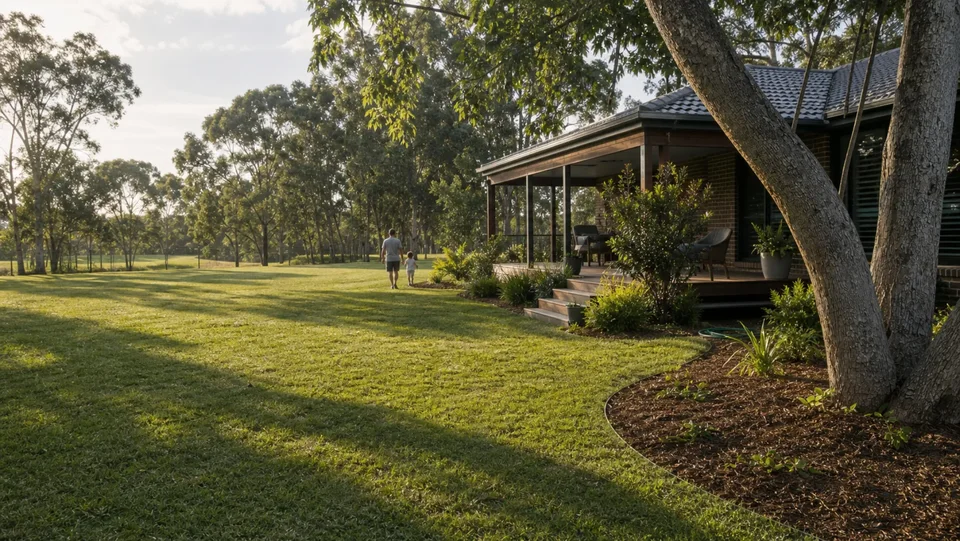
If your lawn gets strong sun and hard use, Kikuyu is often the practical choice. If it has part shade and you want easier care, buffalo may suit better. Couch rewards a sunny, well-kept yard, while some zoysias suit people who value slower growth. Check the yard before settling on a variety.
No grass is best at everything. The varieties that handle shade well are not always the quickest to repair after hard wear, while fast-growing grasses can demand more mowing and edging.
Start with the five questions that matter
A lawn can look sunny when you inspect it at midday in January. The same lawn may sit in shade for most of a July afternoon. That difference can decide whether the turf thickens or slowly becomes bare.
Before comparing varieties, answer these five questions.
| Question | What to check | Why it changes the choice |
|---|---|---|
| How much direct sun reaches the grass? | Observe morning, midday and afternoon in winter as well as summer. | Low light reduces growth and recovery. |
| What will happen on the lawn? | Children, dogs, entertaining, a trampoline, display only or light access. | Fast repair matters more under repeated wear. |
| What is under it? | Sandy soil, sticky clay, builder’s rubble, compacted fill or good topsoil. | Roots need air, water and room to grow. |
| How much care will you give it? | Be honest about mowing, edging, feeding and watering. | A fast lawn can also be a demanding lawn. |
| What does the whole yard do after rain? | Look for pooling, runoff and soggy corners. | Turf cannot solve a drainage fault. |
Which turf suits a sunny, active Sydney lawn?
Kikuyu deserves a place near the top of the list for full sun and heavy use. It grows quickly in warm conditions and repairs worn areas well.
That strength comes with a job attached. Kikuyu can grow into garden edges and needs regular mowing during its fastest months. It is tough, fast and not especially interested in staying inside the border you gave it.
Picture a Western Sydney backyard used by two children and a dog. It receives long afternoon sun and weekend foot traffic. A slower lawn may look tidy at first but struggle to close worn patches. Kikuyu can be the more forgiving choice if the household accepts the mowing and edging.
Buffalo is a strong all-round alternative. It handles part shade better than Kikuyu and can suit a family lawn with moderate wear. Its repair is not as fast after severe damage, so a narrow dog track or permanent goalmouth may still become thin.
Read our guide to turf for dogs and families before choosing solely on toughness.
What is best for part shade?
Buffalo is usually the first type to compare for a Sydney home with mixed sun and shade. It handles lower light better than Kikuyu or couch. Its broader leaf also gives many home lawns a softer, fuller look.
However, “shade tolerant” does not mean “needs no sun”. Grass still needs enough light to make energy. Tree roots, damp soil and foot traffic make a shaded area harder again.
A north-facing front lawn may receive useful winter sun. The strip beside a two-storey house may not. Both can be described as “part shade”, yet they are very different sites.
Do a winter light check before ordering. If the ground receives only broken light beneath dense branches, even a shade-tolerant turf may thin. Our full Sydney shade lawn guide explains how to audit the area and recognise sections where grass is unlikely to last.
When does couch make sense?
Couch can make a fine, attractive lawn in strong sun. It has excellent wear potential and fast warm-season growth. It also performs best when the owner is willing to mow, feed and manage it properly.
Its low shade tolerance is the usual trap in suburban yards. A sunny centre may thrive while the section beside a fence becomes sparse. If a new extension, hedge or neighbouring building will shade the area, include that future shadow in your decision.
Couch makes most sense when:
- the lawn receives reliable direct sun
- you like a fine leaf and close, neat finish
- you will mow consistently during active growth
- garden borders can be edged and contained
- the surface drains well.
If those points sound like chores rather than benefits, choose for your real habits. The most impressive turf on paper is not the best lawn if its care never fits your week.
Could zoysia be a lower-mowing option?
Some zoysia varieties grow more slowly than Kikuyu and can need less mowing. Their leaf, shade response and recovery differ by variety, so “zoysia” is not one single performance promise.
Slower growth has a trade-off. A lawn that grows slowly may also take longer to repair after damage. That can be fine for a quiet front lawn and less helpful beneath a trampoline or along a dog’s daily route.
Ask exactly which variety is being offered. Then compare its local availability, establishment needs and expected care with the faster options. Do not buy a turf type from a single claim such as “low maintenance”. Every living lawn still needs mowing, water, nutrition and observation.
Sydney is not one growing condition
A lawn near the coast may face salt-laden wind, sandy soil and milder nights. A yard farther west may face hotter summer afternoons, heavier clay and colder winter mornings. Established northern suburbs often have large trees and long building shadows. New estates may have compacted fill beneath a thin layer of topsoil.
Conditions change across the city. Western Sydney can be much hotter than the coast, and rainfall can vary sharply from one suburb to another. Soil changes too. Sandier ground often drains quickly, while heavy clay may hold water and compact. Either can support turf when prepared well, but they need different attention.
Try this simple site check:
- Dig several small inspection holes, not just one.
- Look for rubble, roots, compacted layers and changes in colour.
- Wet a sample and feel whether it is gritty, smooth or sticky.
- Watch how quickly water enters and whether it pools.
- Check the finished levels against paths and drains.
If the soil becomes sticky in rain and brick-hard in summer, read our guide to laying turf on Sydney clay. Variety choice will not repair compacted or poorly drained ground.
Match the lawn to the household
Three examples make the trade-offs clearer.
The busy backyard: Full sun, children, a medium dog and regular games. Fast repair matters. Kikuyu may lead, with buffalo worth comparing where the yard has mixed shade.
The shaded courtyard lawn: Morning sun, afternoon building shade and light use. Buffalo may have the better fit, but the winter light audit decides it. A path may be wiser through the darkest traffic line.
The tidy front lawn: Strong sun, little foot traffic and an owner who enjoys mowing. Couch can produce the finer finish. A slower-growing zoysia may appeal if a suitable variety is available and rapid repair is not vital.
The ground matters as much as the grass
Fresh rolls can hide a poor base for a short time. Trouble often appears later as weak rooting, dry patches, pooling or an uneven finish.
Good soil structure lets water enter the ground and gives roots room to grow. Compacted soil restricts both. Prepare the whole root zone rather than sprinkling a thin cosmetic layer over hard fill.
Before turf arrives:
- remove building waste and perennial weeds
- correct drainage and finished levels
- loosen compacted ground where appropriate
- use suitable, tested underlay rather than unknown fill
- settle and level the surface without turning it into concrete
- confirm access, delivery timing and watering coverage.
Our regenerative approach considers the soil below the leaf, not only the green surface on delivery day. At home, careful preparation and less compaction give new roots a better start.
We grow with the long-term health of the farm soil in mind and keep our claims practical.
Do not choose on price per square metre alone
The cheapest roll can become an expensive lawn if it is wrong for the site. Preparation, delivery access, installation and early care also affect the real cost.
Use our Sydney turf cost guide to build the full project budget. Measure the area carefully and allow for the layout, but wait for supplier advice before choosing a waste allowance or ordering quantity.
What should you do before ordering?
Use this final check:
- Record direct sun across a normal day, including winter if possible.
- Mark the hardest-wearing paths and play areas.
- Inspect the soil and drainage after rain.
- Choose how often you will realistically mow and edge.
- Measure the lawn and photograph access from street to yard.
- Compare named varieties, not broad claims.
- Plan delivery, installation and immediate watering together.
- Check current Sydney Water rules before laying.
Sydney Water currently allows drinking water to be used at any time for 28 days after new turf is laid, when used according to professional care instructions. Runoff and overspray onto hard surfaces are still not allowed. Check the rule again near installation because water settings can change.
A practical next step
Compare Kikuyu and Sir Walter for your yard.
Not sure which turf suits your yard? Ask Demarco for help choosing. Send your postcode, lawn measurements and photos showing sun at different times. Include dogs, children, drainage problems and how often you want to mow. That gives us something real to assess.
Frequently asked questions
What is the best all-round turf for Sydney?
Buffalo is often a strong all-round candidate because it balances part-shade performance with manageable home-lawn care. It is not automatic. A sunny, heavily used yard may benefit more from Kikuyu’s faster repair.
Is Kikuyu or buffalo better?
Choose Kikuyu first for strong sun, hard wear and fast recovery. Choose buffalo first for mixed light and a less aggressive growth habit. Compare the two in our Sir Walter Buffalo versus Kikuyu guide.
Can turf grow under a large tree?
Sometimes, but the canopy is only part of the problem. Roots compete for water, fallen leaves cover grass, and repeated foot traffic damages slow growth. Thin the canopy only with appropriate professional advice and consider a non-turf zone near the trunk.
When is the best time to lay turf in Sydney?
Warm active growth usually helps establishment, but turf can be laid in other seasons with the right site and care. Winter brings slower rooting and more risk in damp, shaded or frost-prone areas. See whether winter laying suits your yard.
Does regenerative turf need different care?
New turf still needs correct preparation, close soil contact and careful watering. Any Demarco-specific care difference will be stated in the approved installation instructions, not guessed in this article.