
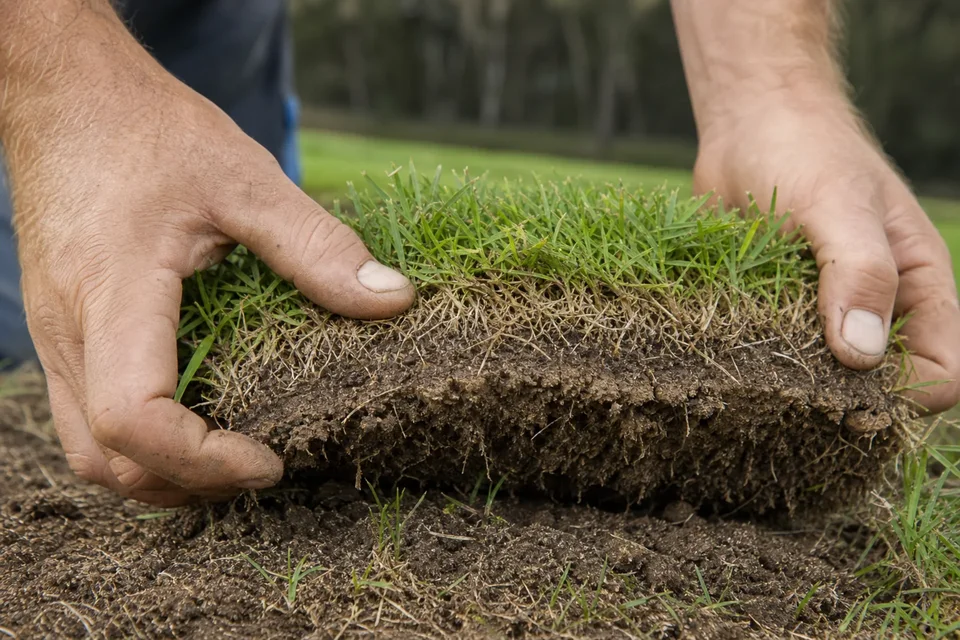
Yes, turf can be laid through a Sydney winter. The ground does not suddenly become closed for business in June. But warm-season grasses grow and root more slowly in cold weather. A sunny, well-drained yard can establish successfully. A wet, shaded or frost-prone site may be better left until warmer conditions.
Winter laying is not mainly a calendar question. It is a site, weather and expectation question.
Why winter changes establishment
Most turf used across Sydney is warm-season grass. Buffalo, Kikuyu, couch and zoysia do most of their strong growth in warmer soil and air. As temperatures fall, growth slows. Some varieties also lose colour or partly go dormant.
Dormant does not mean dead. It means the plant is using less energy and making less new leaf and root growth. The rolls may still establish, but the process usually takes longer.
That slower recovery changes how you use the lawn. A seam opened by a dog, a child or a wheelbarrow may not close quickly. Turf laid for a party in two weeks is a poor winter plan, even if the rolls look green on delivery day.
Sydney winters are not all the same
A sheltered coastal yard and an open yard near Penrith can have very different nights. Frost is more likely in some western and low-lying areas. Established inner and northern suburbs can have milder conditions but heavier winter shade from buildings and trees.
The sun also sits lower. A backyard that receives long summer light may lose hours behind the house in winter. Check the actual lawn surface, not the brightness above the fence.
| Winter condition | What it means for new turf |
|---|---|
| Sunny, free-draining site | Reasonable winter candidate; allow slow rooting. |
| Coastal or sheltered site | Often milder, but still check shade and wet soil. |
| Frost-prone pocket | Greater risk of slow establishment and colour loss. |
| Heavy clay after rain | Delay work if the ground smears, compacts or holds water. |
| Narrow south-facing strip | May lack enough winter light even if it is sunny in summer. |
If shade is the main concern, use our Sydney shade lawn guide before choosing a variety.
The winter go/no-go checklist
Walk the site after rain and answer each question.
- Does water leave the area instead of pooling?
- Is the prepared surface firm without being compacted?
- Does direct winter sun reach most of the lawn?
- Can people and pets stay off while roots begin to hold?
- Can the turf be laid on the day it arrives?
- Does the irrigation reach every edge and corner?
- Is there a run of reasonable weather rather than severe rain or frost?
- Can you accept slower colour and growth until spring?
Mostly yes means winter laying may be sensible. Several no answers mean the issue is the site, not the turf calendar.
Which turf is best to lay in winter?
Choose the turf for the long-term yard. Do not select an unsuitable variety simply because it happens to look greener during the week you buy it.
Buffalo is often considered where winter shade is important. Kikuyu can be a strong choice for sunny, hard-used lawns, but its warm-season growth slows in winter. Couch usually wants reliable sun. Zoysia performance differs by named variety and may establish slowly.
Our best turf for Sydney guide compares light, wear, soil and maintenance.
Winter colour is also not the same as plant health. A warm-season lawn may look duller while remaining alive. Do not chase colour with unplanned fertiliser or excessive water.
Preparation matters more when growth is slow
Fresh turf cannot quickly hide a rough or damaged base in winter. Make the ground right before delivery.
Prepare a smooth, firm surface without compacting it hard. Correct drainage problems, use suitable soil and lay the rolls without gaps. Roots need both air and moisture below the turf.
Prepare in this order:
- Remove weeds, rubble and failed lawn.
- Correct drainage and finished levels.
- Loosen compacted ground where appropriate.
- Add suitable soil only where the existing root zone needs it.
- Level and settle the surface without making it hard.
- Test sprinklers before the truck arrives.
- Confirm labour, access and disposal plans.
Do not cultivate wet clay. NSW environment advice warns that working clay while wet can compact it and damage its structure. If soil sticks to tools and boots, postponing the job may save weeks of trouble.
Read our Sydney clay soil turf guide before covering slow-draining ground.
What does winter laying day look like?
Start early enough to finish and water the lawn. Keep delivered rolls shaded, lay them promptly and water each completed section without delay.
Lay rolls tightly with staggered joins, like bricks. Avoid stretching pieces because they can shrink back. Use full rolls along visible edges and small cuts in less prominent areas. Keep soil off the leaf and avoid repeated walking on newly placed turf.
Water completed sections if the job is large. The first watering must wet the turf and the soil immediately below it. Check by lifting a corner rather than judging the colour from the path.
Do not lay onto frozen, saturated or muddy ground. Do not plan delivery before the drainage, soil and levels are ready. Turf sitting rolled while someone finishes excavation is already behind.
How long does winter turf take to root?
There is no reliable Sydney-wide number of days. Variety, soil temperature, sun, moisture and weather all matter.
Use the pull test. Gently lift a corner in several places. If it lifts easily, roots have not secured it. If it resists, establishment has begun. The turf itself tells you more than the calendar.
Do not pull hard enough to tear new roots. Test different zones because the sunny centre may root before the shaded edge.
Keep pets, games and furniture off until the lawn holds. For necessary access, use a board to spread weight and remove it afterwards. A permanent board blocks light and traps moisture.
Watering in cool weather
Winter air may be cool, but new rolls can still dry at the edges. Wind can remove moisture even when the day does not feel hot. At the same time, shaded clay can stay wet for too long.
Water according to the turf, soil and weather. Use a rain gauge so you know how much water reaches the lawn. Adjust for temperature, wind and whether the turf has begun to hold.
Our new turf watering schedule for Sydney explains the first six weeks. Keep the new root zone moist during early establishment without leaving it swampy, then reduce the frequency as roots take hold.
Sydney Water currently allows drinking water to be used at any time for 28 days after turf is laid, according to supplier or professional care instructions. Runoff and overspray onto hard surfaces are not allowed. Check the rules again before installation.
Common winter mistakes
Ordering for instant use
Green rolls look finished, but the roots are not. Book winter turf well before the lawn must handle normal traffic.
Watering every day without checking
Automatic daily watering can saturate cool shaded soil. Lift a corner, feel below it and account for rain.
Letting the turf dry because it is cold
Cold does not protect cut turf from drying. Check exposed edges and windy sections.
Mowing before it has held
A mower can shift loose rolls. Wait for rooting, use sharp blades and remove only a modest amount of leaf.
Feeding to force growth
More fertiliser cannot create warm soil or sunlight. Follow the named turf’s care instructions and avoid adding products merely because colour is slow.
Where regenerative growing fits
Regenerative turf is not a promise that winter no longer matters. Our focus on the soil should continue after turf leaves the farm: avoid compaction, maintain useful soil structure and give roots the conditions to establish.
How turf is grown matters, but healthy turf still needs a well-prepared root zone when it reaches your home.
Should you lay now or wait?
Lay now if the work is ready, the site drains and you can protect the lawn while it roots. Winter can also be useful when cooler weather makes physical installation more comfortable and water demand is lower than on a hot summer day.
Wait if preparation would damage wet soil, frost is persistent, winter shade removes useful light or the lawn must handle immediate traffic. Waiting is not failure. It can be the decision that stops you buying the same lawn twice.
See our Sydney turf delivery options. For a site-specific call, send Demarco your postcode and lawn photos, including a photo of the winter shadow and the ground after rain.
Frequently asked questions
Will turf die if it is laid in winter?
Not simply because it is winter. It faces greater risk when the site is waterlogged, dark, frosty or used before roots hold. Correct preparation and realistic expectations matter.
Can I lay turf before rain?
Light rain can help moisture, but heavy rain can damage levels, make clay unworkable and cause runoff. Check the forecast and postpone if the prepared base may become saturated.
Will new turf stay green through winter?
Colour depends on variety and local conditions. Warm-season turf may lose colour as growth slows. Confirm expectations for the named product rather than treating winter colour as proof of health.
When can I mow winter-laid turf?
Mow after roots hold and the lawn needs cutting. Test several areas, use a light mower with sharp blades and avoid removing too much leaf at once.
Is spring always better?
Spring usually brings stronger growth, but a well-prepared winter site can succeed. A poorly drained spring site can still fail. Choose around the actual conditions.