
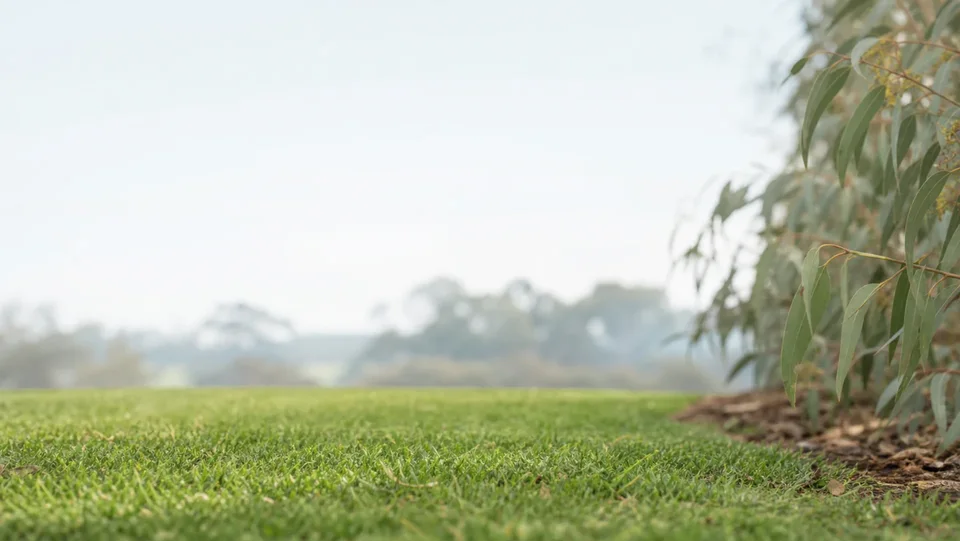
Buffalo is usually the first turf to consider for a shaded Sydney lawn. It tolerates lower light better than Kikuyu or couch. But no turf grows well without enough light. A narrow side yard that stays dim, wet and busy through winter may need a path, garden bed or another surface instead.
Buffalo generally handles shade better than Kikuyu or couch. “Shade tolerant” still does not mean that it can grow without direct light.
First, work out what sort of shade you have
Shade changes by hour and season. A place that receives afternoon sun in December may lose it when the winter sun sits lower. A deciduous tree creates a different problem from a solid two-storey wall.
Use this simple shade audit on a clear day:
- Mark the proposed lawn on a rough sketch.
- Take a photo at 9am, noon and 3pm.
- Note where direct sun touches the ground.
- Repeat in winter if you are planning during summer.
- Mark tree roots, damp corners and regular walking lines.
- Check the ground again after rain.
| Shade type | What it looks like | Likely turf outlook |
|---|---|---|
| Moving or light shade | Sun reaches the ground for a useful part of the day. | A shade-tolerant turf may perform well with sound care. |
| Filtered tree shade | Broken light, roots and leaf drop. | Possible, but competition and debris add pressure. |
| Building shade | A solid shadow that lasts much of the day, especially in winter. | Risky if direct light is brief or absent. |
| Damp shade | Slow drying, moss, soft soil or pooling. | Correct drainage first; turf may remain unsuitable. |
| Shade plus traffic | A dim side passage, clothesline route or dog track. | Very difficult because wear is faster than repair. |
Why is buffalo usually the best starting point?
Buffalo has broad leaves and is commonly used for home lawns with mixed light. It tolerates shade better than many warm-season alternatives, although it repairs more slowly after heavy wear. This can work well where a suburban lawn moves between sun and shadow without becoming a permanent traffic lane.
It is not the best at every job. Kikuyu normally repairs wear faster. Couch can make a fine lawn in strong sun. If most of the yard is sunny and only one corner is shaded, it may be better to change that corner rather than choose the whole lawn around it.
See the Sir Walter turf page for current product details and care advice.
Why Kikuyu and couch struggle sooner in shade
Kikuyu loves useful sunlight and warm growth. It can handle hard use and close worn patches quickly when conditions suit it. In shade, that advantage fades because growth slows. The lawn can become thin, especially where people or dogs repeat the same route.
Couch generally needs stronger sun. It can look excellent in an open yard, yet retreat beside a wall or under a dense canopy. Laying it because the sunny section looks good may leave a bare edge later.
Kikuyu and couch repair quickly in favourable growing conditions, but both need more direct sun than buffalo. Buffalo copes better with shade but repairs more slowly after heavy wear.
For a whole-yard comparison, start with our guide to choosing turf for Sydney. If the yard is sunny but busy, the dog and family turf guide may matter more than shade tolerance.
Shade is often three problems wearing one coat
Low light is rarely alone. Solve the other pressures and you give the grass a better chance.
Tree roots compete with the lawn
Large trees draw water from the same ground. Their roots may sit close to the surface, leaving little prepared soil for turf. Removing major roots can harm or destabilise a tree, so get qualified arborist advice before cutting them.
Fallen leaves also block light and hold moisture against the grass. Rake them gently and regularly. Do not scalp the turf while trying to clear them.
Damp ground restricts roots
A shaded area dries slowly. If water also pools there, turf roots may lack air. Compacted soil makes the problem worse by restricting drainage and root growth.
Look for grey or murky subsoil, a sour smell, moss, puddles or ground that stays soft long after rain. These can point to poor drainage that needs attention before turf is laid.
Do not hide the problem under fresh underlay. Work out where water should go and obtain drainage advice where needed.
Traffic arrives faster than recovery
Grass uses light to grow. Less growth means slower repair. A shaded clothesline route used twice a day can do more damage than a sunny play area used on weekends.
Use stepping stones or a proper path along the unavoidable line. Move the trampoline, bins or outdoor furniture periodically. If a dog runs the fence every morning, no shade rating will cancel that wear.
A Sydney side-yard reality check
Imagine a 1.5-metre-wide strip between a house and a south-facing fence. It receives a short patch of summer sun but almost none in winter. The air is still, the soil stays damp, and the strip is the only route to the bins.
Buffalo may survive for a while after laying. The green rolls contain stored energy and look convincing. Over time, low light and daily wear can take more than the plant replaces.
A firm path with shade planting beside it is likely to work better. It will also avoid repeated spending on patches. Turf is useful, but it does not need to cover every square metre to make a yard feel green.
Now compare a north-east backyard with morning sun, light afternoon shade and little traffic. If the soil drains, tree roots are not crowding the surface and leaves are cleared, a shade-tolerant buffalo has a fair chance.
Can pruning make enough difference?
Sometimes careful canopy work improves light and air movement. It may also reduce leaf litter. The decision must consider tree health, council rules, habitat and safety—not just the lawn below.
Do not remove large branches or roots without checking requirements and getting appropriate advice. Pruning also cannot move a building. If the main shadow comes from a wall, design around it.
Remove fallen leaves before they form a mat, redirect foot traffic and avoid mowing the shaded section too short. Follow the mowing range for the named variety rather than picking one height for every turf.
When should you stop trying to grow grass?
Choose another surface when several of these signs appear together:
- no useful direct sun reaches the ground in winter
- existing grass and common weeds both remain sparse
- moss returns after treatment
- soil stays wet long after surrounding areas dry
- large surface roots fill the available ground
- the area is a daily walking or dog route
- nearby walls prevent useful air movement
- you have already relaid turf without fixing the cause.
Possible alternatives include a path, permeable paving, gravel, mulch or shade-suited planting. Choose around soil, pets and drainage. Avoid treating artificial turf as an automatic answer without considering heat and drainage.
How to prepare a shaded area that can support turf
If the audit shows enough light, prepare the ground before delivery.
- Fix drainage. Water should not sit beneath the turf.
- Remove rubble and weeds. Do not cover a building-site base with a token layer of soil.
- Protect important tree roots. Seek advice if roots dominate the area.
- Improve the root zone appropriately. Use suitable material and avoid working clay while it is wet.
- Set correct levels. Keep turf below paths where needed and maintain drainage falls.
- Plan even watering. Shaded zones often need different timing from sunny zones.
- Lay promptly. Coordinate delivery, preparation and labour before rolls arrive.
Read our Sydney clay soil turf guide if the ground becomes sticky when wet or holds water.
Water the soil, not the idea of “shade”
Shaded turf can stay wet longer than turf in full sun. Giving both zones the same watering time may leave one dry and the other soggy.
Check moisture beneath the turf in several places. Look for firm contact with the soil and signs of new rooting. Adjust for weather, soil and exposure instead of relying on a universal number of minutes.
Sydney Water currently permits drinking water at any time for 28 days after new turf is laid, provided it follows professional care instructions. Runoff and overspray onto hard surfaces are not permitted. After that period, current Water Wise Guidelines apply. Review them close to installation because rules can change.
Our six-week new turf watering guide gives a practical framework, but supplier instructions for the actual turf remain important.
How growing and soil care fit together
Regenerative turf should not be sold as a magic fix for shade. How turf is grown matters, but the receiving yard still controls light, drainage and wear.
Our approach is to consider the soil as part of the lawn. For homeowners, that means avoiding needless compaction, preparing a useful root zone and watering according to what the ground is doing. We keep the focus on healthy soil and sound growing practices without pretending they can fix a poor site.
Before you order buffalo for shade
Run this final test:
- Have you checked winter as well as summer light?
- Can direct sun reach each proposed turf zone?
- Does water drain after rain?
- Are tree roots taking most of the soil space?
- Can you move daily traffic onto a path?
- Are you comfortable with a less dense lawn in the hardest section?
- Would a planted or paved edge make the whole yard work better?
If the site still looks suitable, compare the confirmed Demarco turf range. For a recommendation, send Demarco your yard details: postcode, measurements, clear photos and the times direct sun reaches the ground. A short winter video can be more helpful than calling the area “a bit shady”.
Frequently asked questions
How many hours of sun does buffalo need?
There is no safe universal number for every buffalo variety and site. Direct light strength, season, tree competition, drainage and wear all change the result. Use the named variety’s verified specification, then treat it as one part of a site assessment.
Will Sir Walter grow in full shade?
No living turf should be promised for full shade without useful light. Sir Walter is a buffalo and is marketed for shade tolerance, but its confirmed limits must be checked against the real site and current official product information.
Can I mix turf varieties in one yard?
It is possible, but different colour, leaf width, growth and care can create a visible join. A path or garden edge makes a cleaner boundary than an irregular mix. Ask for site-specific advice before ordering two types.
Why did my shaded turf look good and then thin out?
Fresh rolls arrive green and established. Once laid, they must replace used energy through new growth. Low light, wet soil, root competition or traffic may then cause thinning. Diagnose the site before patching it again.
Should I water shaded turf less?
Often it loses moisture more slowly, but do not guess. Check beneath the turf. Water enough for the root zone without leaving it saturated, and separate sunny and shaded irrigation zones where possible.