
Which lawn suits your family?
Answer five quick questions. We’ll point you in the right direction.
How much sun reaches most of the lawn?Think about winter as well as summer.
How busy will the lawn be?
How much mowing and edging suits you?
If the lawn gets worn, how fast must it bounce back?
What matters most when you buy?
The Quick Answer
Choose Kikuyu for a sunny lawn that gets hard wear and needs fast repair during warm active growth.
Choose Sir Walter Buffalo when the yard has mixed light and you want a broad, soft-leaf lawn that is generally easier to contain.
Choose neither without fixing the site first when the ground stays waterlogged, the area receives too little useful light, or everyone is forced through one tiny patch.

Start with sunlight
Light is the first dividing line.
Kikuyu wants strong direct sun. In a bright yard it can put its vigorous growth to work. Under substantial building or tree shade, the same lawn can thin and lose the recovery that made Kikuyu attractive in the first place.
Sir Walter is generally more suitable where light changes across the day. It can manage mixed light better than Kikuyu, but it is not a solution for darkness. Grass beneath a permanently covered trampoline, dense evergreen canopy or narrow south-facing passage may receive too little energy to remain dense.
Do the check in winter if possible. Sydney’s lower winter sun can turn a bright summer strip into a shaded cool-season problem.
Decision: Mostly strong sun? Keep both on the list and move to wear. Meaningful moving shade? Put Sir Walter first. Deep shade? Redesign that section.
Then look at wear and recovery
Kikuyu usually wins when the lawn is sunny and busy. Its vigorous warm-season growth helps it close small divots and worn patches faster.
Sir Walter can handle ordinary family life. It may be the better whole-yard decision when use is moderate and the lawn moves between sun and shade. It does not repair severe wear as quickly as actively growing Kikuyu.
Wear resistance and repair are not the same thing. No grass stays untouched under concentrated traffic. A dog door, side gate, clothesline route or backyard goalmouth can wear out either lawn when every trip lands in the same place.
Decision: Strong sun plus dogs, children or regular games? Kikuyu leads. Mixed light plus normal family use? Sir Walter may fit better. One unavoidable traffic line? Add a path.
Be honest about mowing and edging
Kikuyu is the higher-maintenance choice. In warm, wet weather it grows quickly, so expect more regular mowing and a firm edge around garden beds, paths and paving. If you let it run, it will spread.
Sir Walter Buffalo is easier to keep contained. It still needs normal mowing and edging, but its growth is generally less aggressive. It is often the better fit where a tidy edge matters more than fast repair.
Neither lawn is maintenance-free. Both need water, nutrition and attention. The honest choice is simple: happy to mow and edge more often for a fast-recovering lawn? Choose Kikuyu. Prefer an easier-going lawn edge? Put Sir Walter Buffalo first.
Compare the look and feel
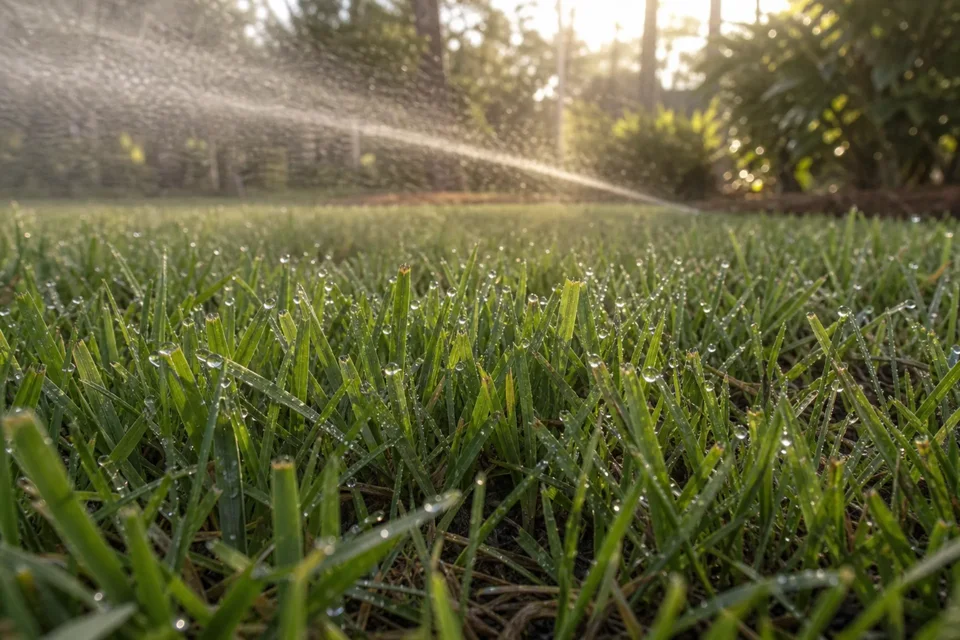
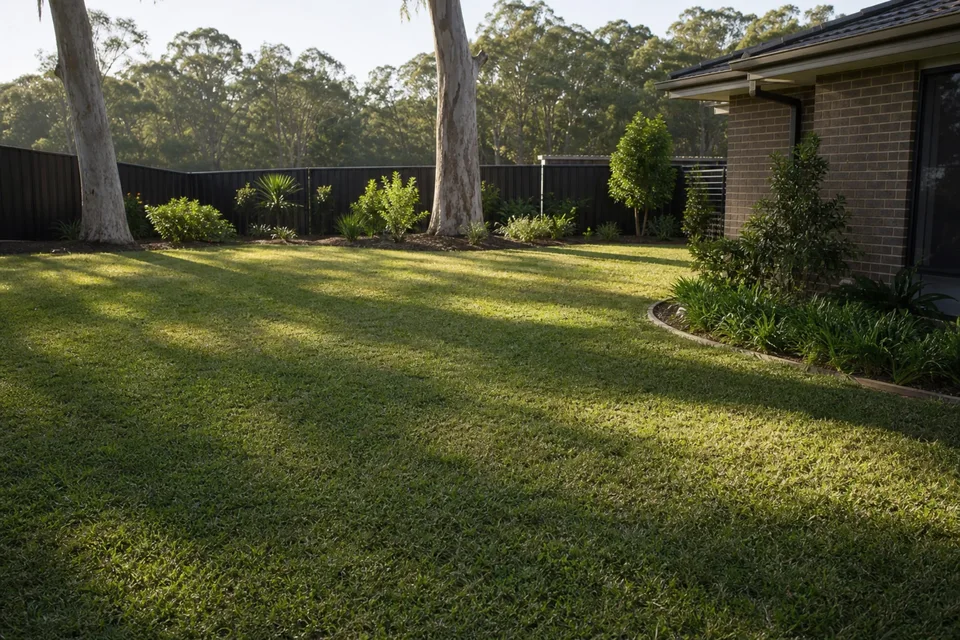
Sir Walter has a broad, soft-leaf appearance that creates a full, relaxed family lawn. Kikuyu has a finer-looking, vigorous surface when it is growing well.
There is no honest universal winner for beauty. Architecture, garden style, mowing and personal taste all matter. Look at real samples in comparable light rather than choosing from a heavily edited photo.
Do not use generated close-up images as proof of cultivar identity. Confirm the named product on the quote and order.
Which is better for dogs?
For an active dog in a sunny yard, Kikuyu’s faster repair often makes it the practical first choice.
For moderate dog use in a yard with mixed light, Sir Walter may be the better overall match. Shade can reduce recovery, so keep the dog’s main route in mind.
Urine concentration, digging, wet soil and traffic patterns can affect either lawn. Rotate play, move objects, rinse only as appropriate under current water guidance and use a durable step or path where traffic cannot be spread.

Better turf, matched to the right yard
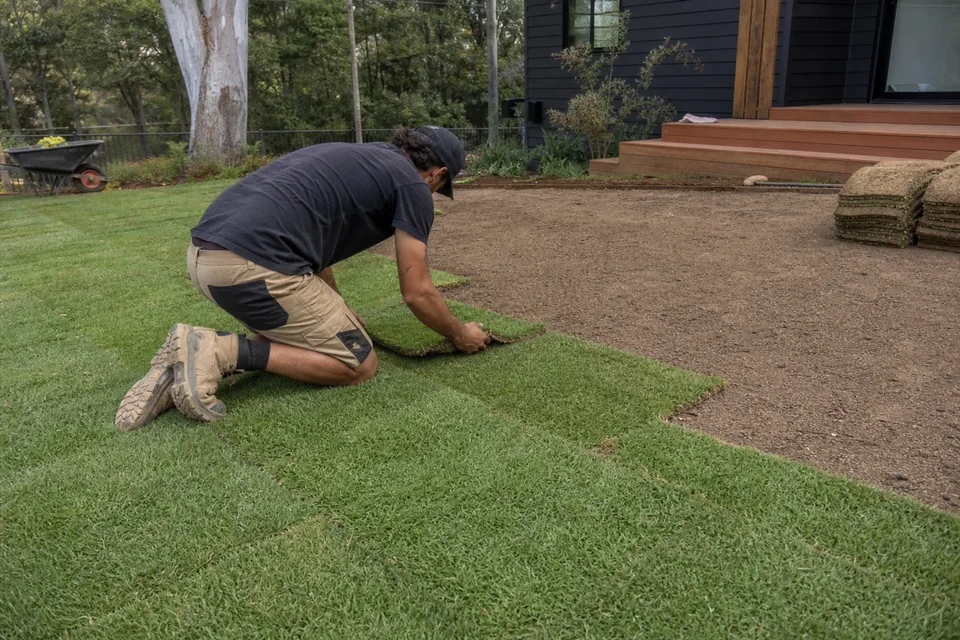
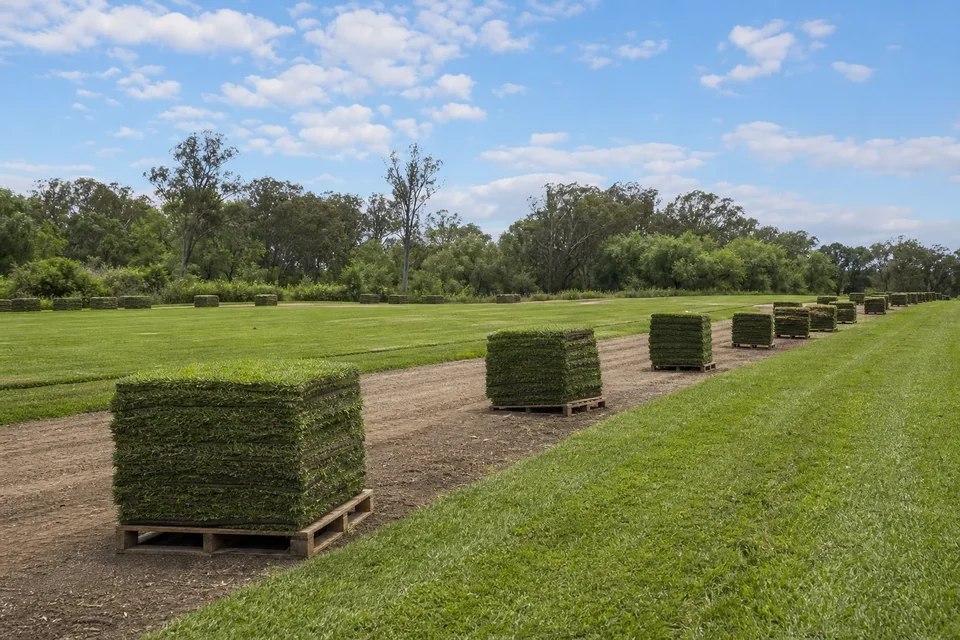
At Demarco Sydney Turf, healthy soil comes first. Our regenerative soil practices help us grow strong, high-quality Kikuyu and Sir Walter Buffalo from the ground up.
That means turf with a solid root base, grown to handle real Sydney backyards, family use and the conditions ahead. Strong turf still needs the right site and care, but quality begins before it reaches your home.
Comparison FAQs
Is Kikuyu or Sir Walter better for Sydney?
Neither is better everywhere. Kikuyu is usually better for strong sun, heavy use and fast warm-season repair. Sir Walter is usually better for mixed light, a broad soft leaf and easier containment.
Which is better for shade?
Sir Walter is generally the better of the two in mixed sun and shade. Deep shade may not support either lawn, especially where traffic or damp soil adds pressure.
Which is better for dogs?
Kikuyu often leads in a sunny yard with heavy dog use because it repairs quickly during active growth. Sir Walter may suit moderate dog use where the yard has mixed light. A concentrated dog track can wear out either grass.
Which needs more mowing?
Kikuyu usually demands more frequent mowing and edging through strong warm-season growth. Sir Walter still needs routine care but is generally easier to contain.
Which stays greener in winter?
Do not rely on a universal guarantee. Both slow in cooler weather. Frost, light, soil, nutrition and local conditions affect winter colour and recovery.
Can I mix Kikuyu and Sir Walter in one yard?
Usually it is better to choose one turf for a visually continuous lawn and redesign unsuitable sections. Different growth rates, textures and maintenance can make a mixed lawn difficult to manage. Ask for site-specific advice before combining them.
Is Sir Walter worth the extra cost?
Do not decide from an assumed price difference. Compare current delivered quotes and, more importantly, the fit for the yard. The wrong cheaper turf can cost more if it fails or demands care the household will not provide.