
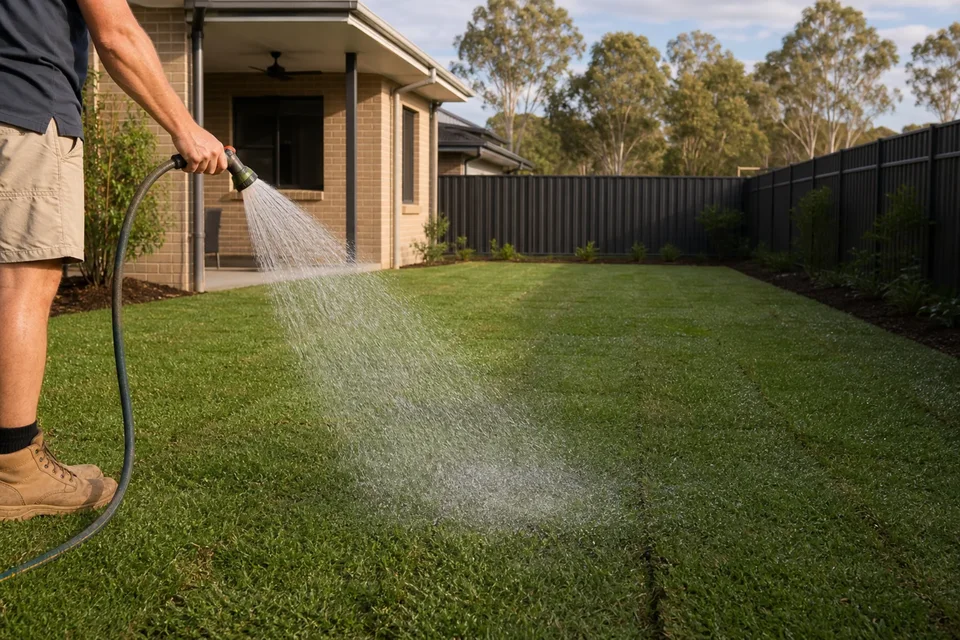
Fresh turf is living grass, and the first stage after laying matters.
A little attention now helps the turf make contact with the soil, begin establishing and grow into the lawn you bought it to become. Use this guide as a clear starting point, then follow any variety-, season- and weather-specific advice supplied with your order.
Before the turf arrives
Finish the site preparation before delivery. Clear the area, create suitable levels and make sure you can water the entire lawn. Plan the work so the turf can be laid promptly after it arrives.
If access, timing or watering will be difficult, solve that before the turf is waiting. A prepared site makes the laying process calmer and gives living turf the best chance to move quickly into establishment.
As the turf is laid
Place the pieces closely together so the edges meet without being stretched. Stagger the joins and keep the turf in close contact with the prepared soil beneath.
Begin watering as the work progresses so the first sections do not sit drying while the rest is laid. After installation, water the whole area thoroughly and check that moisture is reaching the soil beneath the turf rather than only wetting the leaf.
During establishment
Keep the turf and the soil beneath consistently moist while new roots begin to form. Adjust what you do for heat, wind, shade, rainfall and soil conditions instead of following a rigid schedule that ignores the site.
Check several parts of the lawn. Edges, corners and exposed sections can dry differently from shaded or protected areas. Avoid unnecessary traffic while the turf is settling in, especially if the ground is soft or pieces still move easily.
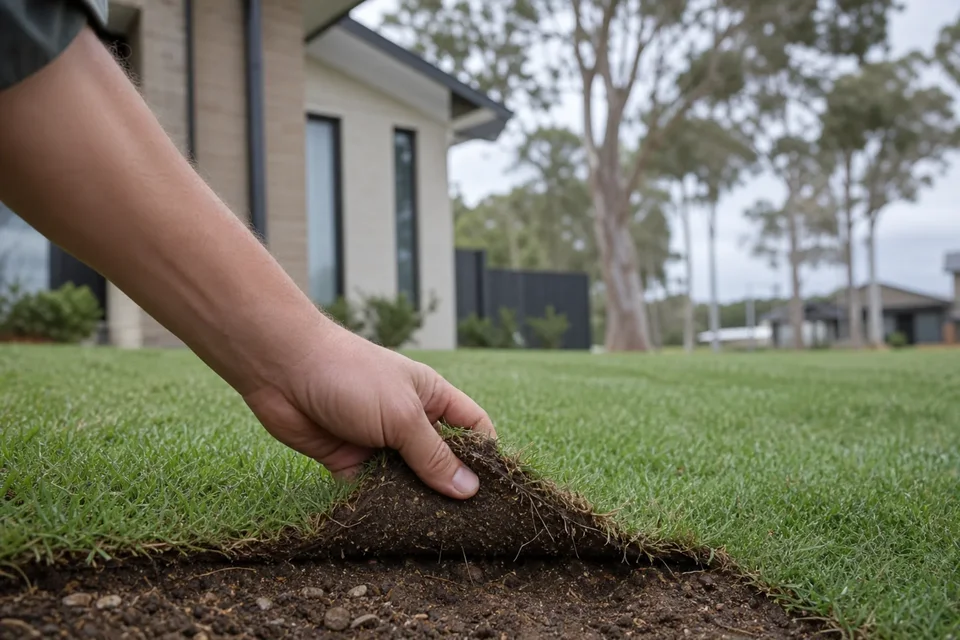
To check progress, gently test an edge in more than one part of the lawn. Turf that still lifts easily needs more time. As the roots begin to hold and the lawn no longer moves freely, watering can gradually shift towards a deeper, less frequent routine suited to the weather, soil and variety.
The first mow
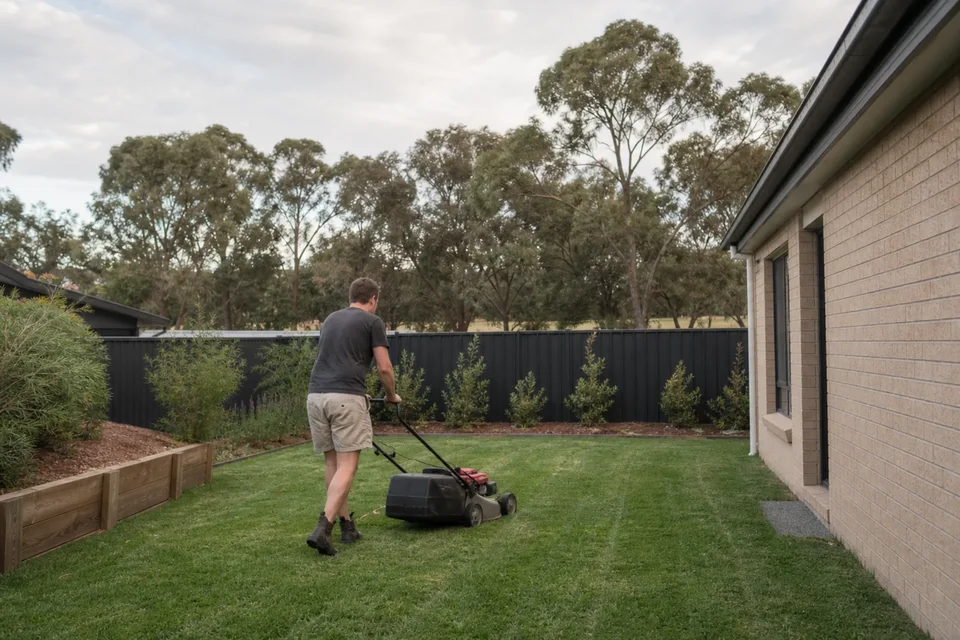
Wait until the turf has begun to anchor and the grass is ready for a light trim. The surface should be firm enough that the mower will not sink, shift the turf or leave ruts.
Use sharp mower blades and avoid scalping. Remove only a modest amount of leaf at once. The first mow is not about forcing the lawn into a perfect finish; it is the beginning of a steady routine.
Ongoing lawn care
Once established, good turf care is steady rather than complicated.
- Water deeply when the lawn and conditions call for it.
- Mow at a height appropriate to the variety and season.
- Keep mower blades sharp for a cleaner cut.
- Watch changes in colour, growth and soil moisture.
- Identify the cause of a problem before applying a treatment.
Kikuyu and Sir Walter Buffalo do not have identical needs, and an open sunny yard behaves differently from a shaded or enclosed space. Use the relevant product guide for confirmed variety-specific advice.
Common things to check
Drying edges Check whether edges and corners receive the same moisture as the centre. These areas can be missed even when the lawn looks evenly watered from a distance.
Turf still lifting It may still be establishing. Minimise traffic and check the moisture beneath the turf in several areas.
Visible joins or gaps Check whether pieces have dried, moved or lost close contact with the soil. Seek advice if gaps are widening rather than beginning to knit together.
Yellowing or slow progress Do not assume one cause. Check moisture, drainage, soil contact, shade and recent weather before deciding what action to take.
Good care protects a good beginning.
Choose the guide for your turf variety, or contact Demarco if the lawn is not behaving as expected.
FAQs
How often should I water new turf? Often enough to keep the turf and the soil beneath consistently moist during establishment. Adjust for weather, soil and exposure, and follow the current advice supplied with your order.
When can I walk on new turf? Keep traffic light until the turf has begun to anchor. Test an edge gently in several areas; if it still lifts easily, it needs more establishment time.
When should I mow it? Mow once the turf has begun to anchor, the surface is firm and there is enough growth for a light trim. Use sharp blades and avoid removing too much at once.
Does Kikuyu need the same care as Sir Walter Buffalo? The principles of establishment are similar, but ongoing mowing, watering and seasonal care can differ. Follow the guide for your variety.
Should I use fertiliser or lawn treatments straight away? Follow Demarco Sydney Turf’s confirmed product-specific advice. Do not apply a treatment simply because the lawn has changed colour; first check moisture, drainage, soil contact, weather and establishment progress.