
Lawn guide · Sydney
New Turf Watering Schedule for Sydney: The First Six Weeks
A practical, weather-aware guide to helping freshly laid turf settle in—without keeping it soaked forever.
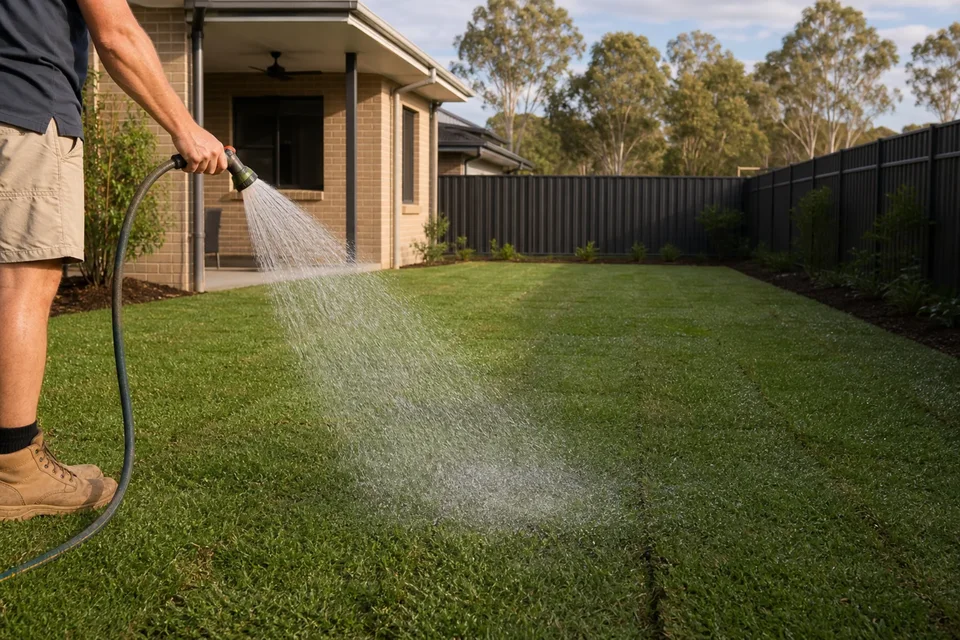
New turf needs plenty of water at first, but it should not stay soaked forever. During the first few days, your job is to stop the rolls and the soil beneath them from drying out. As new roots begin growing into the ground, you can gradually water less often and encourage the lawn to become more independent.
The exact timing will depend on weather, soil, shade and turf variety. A sunny Western Sydney backyard in January will dry much faster than a shaded lawn laid onto clay in winter.
The quick answer
- Water new turf within 30 minutes of laying.
- Keep the turf and soil beneath it consistently moist during the first few days.
- Check beneath the turf instead of judging it by wet leaves.
- Use the gentle pull test to see whether roots have started attaching.
- Once the turf resists lifting, begin watering less often.
- By weeks five and six, a well-rooted lawn should be moving towards normal watering.
Do not follow the same watering time every day for six weeks. Your lawn needs you to respond to what is actually happening outside.
A simple six-week watering guide
| Stage | What to do |
|---|---|
| Laying day | Water within 30 minutes. Make sure the turf and soil beneath it are wet. |
| Days 1–3 | Keep everything evenly moist. Check edges, joins and sunny areas regularly. |
| Until the turf takes root | Continue watering as needed and use the gentle pull test in several places. |
| Weeks 3–4 | Once the turf resists lifting, begin watering more deeply and less often. |
| Weeks 5–6 | Move towards normal lawn care, adjusting for weather, soil and turf variety. |
This is a general guide rather than a fixed calendar. Turf laid during hot or windy weather may need more attention. Turf laid in winter, deep shade or heavy clay may take longer to establish. Always follow the final care instructions supplied with your turf if they differ from this guide.
Before your turf arrives
Watering problems often begin before the turf is even laid. Test your sprinklers before delivery day. Make sure the whole area receives water, including corners, edges and narrow sections.
Check your watering setup
- Turn on each sprinkler and watch where the water lands.
- Place several rain gauges or straight-sided containers around the lawn.
- Check whether each part of the area receives roughly the same amount.
- Fix blocked nozzles, weak pressure and areas being missed.
- Make sure a hose can reach exposed edges and awkward corners.
- Separate sunny and shaded areas into different watering zones where possible.
A sprinkler may make the lawn look wet while barely reaching one corner. Testing it beforehand gives you time to fix the problem rather than discovering it after the turf starts drying.
Laying day: start watering straight away
Do not wait until the entire lawn has been laid. Begin watering completed sections while the rest of the job continues, especially on a warm or windy day. Freshly harvested turf can dry surprisingly quickly while sitting in the sun.
The first watering needs to reach the grass itself, the soil attached to the turf and the prepared soil underneath. Lift a corner in several places after watering. The soil underneath should feel properly moist, not dusty or dry.
Pay extra attention to edges beside hot paving, narrow offcuts, high or windy parts of the lawn, corners missed by sprinklers, sections laid last and slopes where water runs away.
Avoid creating puddles or allowing water to run onto paths and into drains. Heavy runoff wastes water and can disturb the prepared soil beneath the turf.

Days one to three: keep the turf moist
During the first few days, new turf has very limited access to moisture in the ground. Its roots have not yet grown into the soil beneath it. Check the lawn more than once a day rather than assuming one morning watering will always be enough.
In warm or windy conditions, inspect it again later in the day. During cool or rainy weather, it may stay moist for much longer. Lift corners in several areas and feel underneath.
You want the soil to feel moist but not dusty, cool but not waterlogged, and firm but not hard and dry. If edges begin curling, joins start opening or the soil beneath feels dry, the lawn needs attention. If the ground remains soggy, footprints fill with water or the turf feels constantly squelchy, it may be receiving too much.
Do not assume every yellow or dull patch needs more water. Poor soil contact, heat, cold, drainage problems and overwatering can sometimes look similar from above.
Until the roots hold: use the pull test
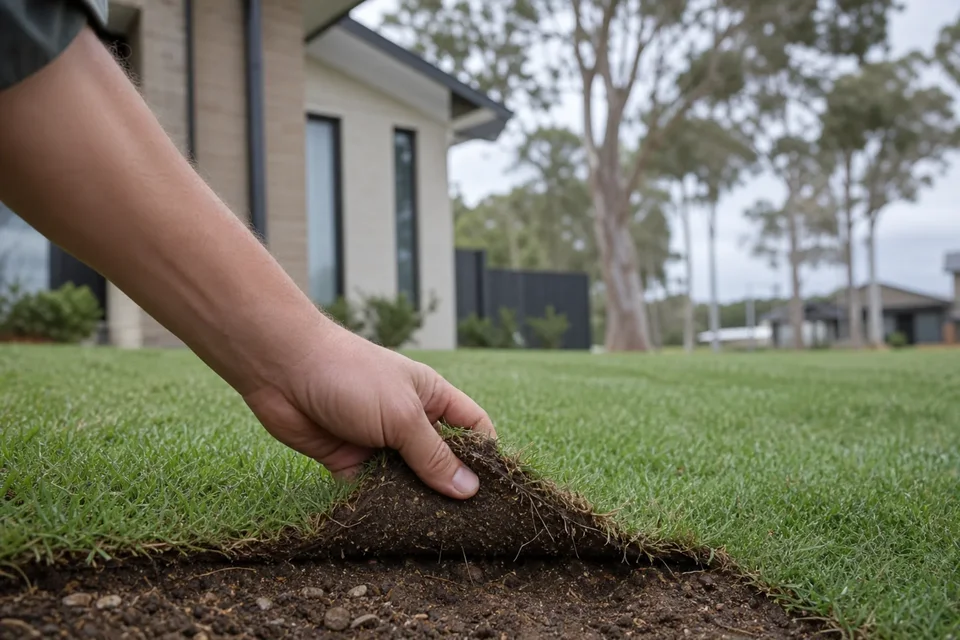
The easiest way to check whether new turf is taking root is with a gentle pull test. Choose an edge and carefully try to lift it. If it comes up easily, the roots have not properly attached. If you feel resistance, new roots are beginning to grow into the soil.
Test several parts of the lawn. A sunny centre, shaded side and windy boundary may establish at different speeds. Do not pull hard enough to break the new roots.
While the turf still lifts easily:
- Keep traffic off the lawn.
- Maintain moisture beneath the rolls.
- Hand-water any corners missed by sprinklers.
- Reduce watering after useful rainfall.
- Avoid flooding shaded or slow-draining areas.
Once the turf resists lifting in several places, begin spacing the watering further apart. Make the change gradually rather than stopping frequent watering all at once.
Weeks three and four: begin watering less often
By weeks three and four, many lawns will be moving from keeping the rolls moist to watering the soil beneath them. The lawn should no longer lift easily, although shaded areas or turf laid during winter may take longer.
Water more thoroughly, then allow more time before watering again. The top of the soil can begin drying slightly between waterings while useful moisture remains further down. Use a screwdriver or small garden trowel to check how deeply the water has travelled.
If one corner keeps drying, do not automatically run the entire sprinkler system for longer. Hand-water the missed section and adjust the sprinkler coverage. Otherwise, the rest of the lawn may become too wet.
Weeks five and six: move towards normal care
By weeks five and six, well-established turf should be treated more like a normal lawn. Water according to soil moisture, recent rainfall, temperature, wind, sunlight and turf variety.
There is no single weekly number that works for every Sydney lawn. Sandy soil drains quickly. Clay holds moisture for longer but may absorb water slowly. A sunny lawn may need water before a shaded section of the same yard.
Signs that the lawn is establishing well include:
- The turf cannot be lifted easily.
- Joins are beginning to close.
- Footprints recover instead of remaining flattened.
- Roots are visible in the soil below.
- Water is reaching beneath the surface.
- The ground is firm rather than constantly soft.
If these signs are missing, investigate the cause before simply adding more water.
How long should you run the sprinkler?
There is no reliable answer such as “water for ten minutes”. Different sprinklers can deliver completely different amounts of water during the same runtime. A rain gauge gives you a much better answer.
How to measure your sprinkler
- Place several rain gauges or identical straight-sided containers across the lawn.
- Run the sprinkler for a set amount of time.
- Measure the water collected in each container.
- Compare the results to see whether coverage is even.
- Adjust the sprinkler position or runtime as needed.
For example, if the containers collect an average of 1.5 mm in ten minutes, the sprinkler will take approximately 20 minutes to apply 3 mm. Demarco Sydney Turf’s general starting measure during establishment is around 3 mm per watering, adjusted for weather, soil and the care instructions for your turf variety.
If one container collects 3 mm and another only 0.5 mm, running the sprinkler longer will not fix the problem. The well-watered section will become soaked while the dry section still receives too little. Fix the coverage instead.

Adjusting for Sydney conditions
Hot or windy weather
Check the lawn more often. Wind can dry turf quickly, even when the temperature does not seem extreme. Exposed edges and raised areas may dry before the centre of the lawn. Water early enough to protect the turf, but stop before water begins running off.
Rain
Rain counts as watering, but only when enough reaches the soil beneath the turf. A quick shower may wet the leaves without reaching the ground. After heavier rain, lift a corner or check the soil before running the sprinkler again.
Shade
Shaded areas usually dry more slowly. They may not need the same watering frequency as sunny sections. Constantly watering shade like full sun can leave the soil wet for too long.
Clay soil
Clay can absorb water slowly and remain wet for longer. Shorter watering periods with time to soak in may reduce runoff. However, watering differently will not repair a serious drainage problem.
Sandy soil
Sandy soil drains more quickly and may need closer checking during hot or windy weather. Good soil preparation helps retain useful moisture without leaving the roots waterlogged.
Sydney Water rules for new turf
Under Sydney Water’s current Water Wise Guidelines, drinking water can be used at any time during the first 28 days after new turf is laid, provided the watering follows instructions from the supplier, installer or care professional. Water must not run onto paths or other hard surfaces.
After the 28-day establishment period, ordinary lawn watering with drinking water is generally permitted before 10 am and after 4 pm. Smart watering systems and drip irrigation may operate between 10 am and 4 pm under the current guidelines. Check Sydney Water’s current rules near installation, as requirements can change.
Signs your new turf needs more—or less—water
Your lawn may be too dry if:
- Roll edges begin curling or shrinking.
- Joins start opening.
- The soil underneath feels dry.
- Grass blades fold or lose firmness.
- Footprints remain visible.
- High or windy areas decline first.
Check sprinkler coverage before increasing the watering time. One blocked or poorly positioned nozzle may be causing the problem.
Your lawn may be staying too wet if:
- The ground remains soft or squelchy.
- Water pools on the surface.
- Water regularly runs onto paths.
- The soil smells stale or sour.
- Turf still lifts easily despite constantly wet soil.
- Algae or disease-like patches appear.
- Shaded areas decline while sunny sections remain healthy.
Do not keep adding water because the turf looks unhappy. Check the soil underneath and work out whether the problem is dryness, excess moisture or poor drainage.
When can you mow new turf?
Wait until the turf has taken root and the lawn genuinely needs cutting. The ground should be firm enough that the mower will not sink or leave ruts. The turf should also resist lifting when gently tested.
For the first mow, use sharp mower blades, avoid wet or saturated ground, remove only a modest amount of the leaf and do not scalp the lawn. The first mow should be light. You can gradually settle into a normal mowing height as the lawn becomes established.
When can children and dogs use the lawn?
Keep people and pets off the turf while it still lifts easily or the soil is soft enough to leave deep footprints. Repeated traffic can break developing roots, move the rolls and create low spots. Once the turf is firmly attached and the ground feels stable, introduce normal use gradually. Lawns laid during winter or in heavy shade may take longer to reach this point.
Keep a simple watering record
You do not need a complicated lawn diary. During the first six weeks, record rainfall, sprinkler measurements, very hot or windy days, when the turf begins resisting the pull test and a few dated photos.
This information is extremely useful if part of the lawn begins drying out or stays wet. When asking Demarco Sydney Turf for advice, include your turf variety, date it was laid, postcode, photos of the affected area, soil type if known, sprinkler measurement, and recent rainfall and watering.
Frequently asked questions
How many minutes should I water new turf?
Measure the amount of water rather than relying on minutes alone. Different sprinklers apply water at very different rates. Use rain gauges or straight-sided containers to measure the depth being delivered.
Should new turf be watered every day?
It may need daily or more frequent attention at first, particularly during hot or windy weather, but “every day for six weeks” is not a useful rule. Watering frequency should reduce as the turf develops roots and the weather changes.
Can I rely on rainfall?
Only when the rain has reached the soil beneath the turf. A light shower may wet the leaves while leaving the soil dry. Lift a corner or check with a small trowel before deciding whether to skip watering.
Why are the edges drying first?
Edges receive more heat and moving air, particularly beside paving and fences. Sprinklers also commonly miss them. Hand-water the affected edge while correcting the sprinkler coverage.
Should the turf always feel wet?
No. It should remain consistently moist during the early stage, but it should not stay waterlogged. As the roots establish, begin allowing more time between waterings.
What if one part of the lawn is dry and another is wet?
This usually points to uneven sprinkler coverage, different sunlight or changing soil conditions. Treat the areas separately where possible. Do not soak the entire lawn just to reach one missed corner.
When can children and dogs go onto the lawn?
Wait until the turf resists lifting and the ground is firm enough that normal traffic will not move the rolls or leave deep marks. Introduce heavy use gradually.
Need help with your new lawn?
If your turf is drying unevenly, staying wet or not beginning to take root, contact Demarco Sydney Turf before the problem spreads. Send clear photos, your laying date, turf variety and a quick description of how much water the lawn is receiving.